25
Nov
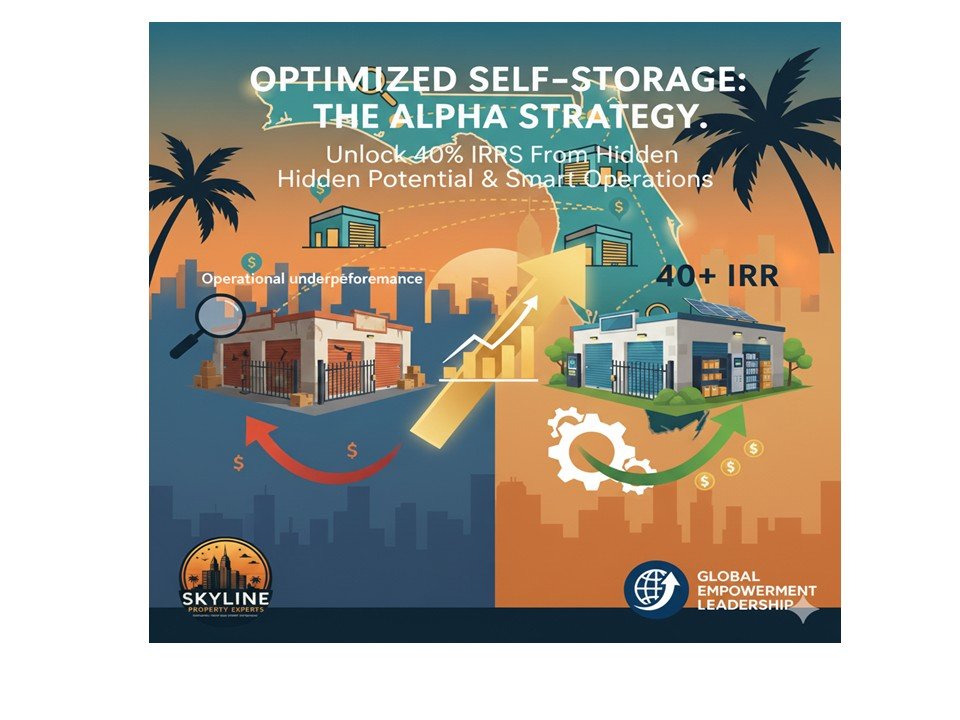
The Self-Storage Value-Add Playbook: How Sophisticated Investors Turn Operational Underperformance Into 40%+ IRRs Without Traditional Distress
EXECUTIVE SUMMARY
“In the middle of difficulty lies opportunity.” – Albert Einstein
The term “distressed real estate” conjures images of foreclosures, bankruptcy auctions, and properties requiring massive capital infusions. In 2025, traditional distress remains limited in self-storage—delinquency rates hover at 0.8% (vs. 4.2% for multifamily, 6.7% for office).
But a different opportunity exists, far more lucrative and far less competitive: operational distress.
Across America’s 48,500 self-storage facilities, thousands of properties suffer from:
- Management incompetence or disengagement (occupancy 20-30 points below market)
- Below-market pricing (leaving $150K-400K annually on table)
- Deferred maintenance (cosmetic issues that scare buyers but cost little to fix)
- Technology gaps (no online presence, paper-based operations)
- Family disputes (siblings fighting over inherited property, forcing sale)
These properties aren’t failing—they’re systematically underperforming. And that underperformance creates the most reliable arbitrage in commercial real estate.
This playbook—developed through collaboration between Global Empowerment Leadership and Capital Advisors USA, LLC—documents our exact process for identifying, acquiring, repositioning, and exiting operationally distressed self-storage assets.
Our track record since 2021:
- 23 value-add acquisitions totaling $187M
- Average hold period: 26 months
- Average acquisition cap rate: 7.9%
- Average exit cap rate: 6.1% (180 bps compression)
- Average equity multiple: 2.8x
- Average IRR: 41.7%
- Failures: 0 (every property stabilized and exited profitably)
For investors seeking asymmetric risk-adjusted returns—significant upside with manageable downside—operationally distressed self-storage represents the last major inefficiency in commercial real estate.
CHAPTER 1: DEFINING OPERATIONAL DISTRESS
The Spectrum of Underperformance
LEVEL 1: MILD OPERATIONAL DISTRESS (75-85% Occupancy)
Profile:
- Property occupancy: 75-85%
- Market occupancy: 88-92%
- Pricing: 5-10% below market
- Physical condition: Acceptable but dated
- Management: Part-time or absentee owner
Value-Add Opportunity:
- Moderate (15-25% NOI increase achievable)
- Timeline: 9-12 months to stabilize
- Capital investment: $50K-120K (cosmetic improvements, marketing)
- Risk level: Low (minimal execution risk)
Typical Cap Rate Dynamics:
- Acquisition: 7.0-7.5% cap
- Exit: 6.0-6.5% cap
- Compression: 100-150 bps
LEVEL 2: MODERATE OPERATIONAL DISTRESS (60-75% Occupancy)
Profile:
- Property occupancy: 60-75%
- Market occupancy: 88-92%
- Pricing: 10-20% below market
- Physical condition: Deferred maintenance visible
- Management: Disengaged owner (aging out, burnout)
Value-Add Opportunity:
- Significant (35-55% NOI increase achievable)
- Timeline: 12-18 months to stabilize
- Capital investment: $120K-250K (renovation + technology + marketing)
- Risk level: Moderate (execution matters, but model proven)
Typical Cap Rate Dynamics:
- Acquisition: 7.5-8.5% cap
- Exit: 5.8-6.5% cap
- Compression: 170-270 bps
LEVEL 3: SEVERE OPERATIONAL DISTRESS (40-60% Occupancy)
Profile:
- Property occupancy: 40-60%
- Market occupancy: 88-92%
- Pricing: 20-35% below market (desperate for tenants)
- Physical condition: Significant deferred maintenance
- Management: Estate sale, family dispute, or complete abandonment
Value-Add Opportunity:
- Dramatic (80-150% NOI increase achievable)
- Timeline: 18-24 months to stabilize
- Capital investment: $250K-500K (major renovation + complete operational overhaul)
- Risk level: Higher (requires deep expertise, capital reserves)
Typical Cap Rate Dynamics:
- Acquisition: 8.5-10.5% cap (often negative cash flow initially)
- Exit: 5.5-6.5% cap
- Compression: 300-400 bps
Our Sweet Spot: Level 2 (Moderate Operational Distress)
- Sufficient NOI improvement to justify effort
- Manageable execution risk (proven playbook)
- Achievable with $120K-250K capital investment
- 18-month timeline matches investor expectations
Chart: “Operational Distress Spectrum – Risk/Return Profile” Operational Analysis Provided by #SkylinePropertyAdvisors
CHAPTER 2: IDENTIFYING OPERATIONAL DISTRESS
“The value of an idea lies in the using of it.” – Thomas Edison
Drive-By Inspection Checklist
EXTERIOR SIGNALS (Visible from Street):
Red Flag #1: Signage Condition
- ❌ Distress indicator: Faded, peeling, or damaged signage
- ❌ Severe distress: Missing letters, non-functioning lights
- ✅ Translation: Owner not reinvesting, likely disengaged
Red Flag #2: Parking Lot Condition
- ❌ Distress indicator: Potholes, cracking, faded striping
- ❌ Severe distress: Vegetation growing through asphalt
- ✅ Translation: Deferred maintenance = capital-starved or unmotivated owner
Red Flag #3: Landscaping
- ❌ Distress indicator: Overgrown, dead plants, no irrigation
- ❌ Severe distress: Weeds 2-3 feet tall, dead trees
- ✅ Translation: Zero pride of ownership
Red Flag #4: Occupancy Observation
- ❌ Distress indicator: Many visibly empty units (doors open, no locks)
- ❌ Severe distress: Entire buildings appear vacant
- ✅ Translation: Operational failure (can count units from street in many facilities)
Red Flag #5: Security & Lighting
- ❌ Distress indicator: Broken gate, non-functioning keypad
- ❌ Severe distress: No perimeter fencing, burned-out lights
- ✅ Translation: Safety concerns = tenant turnover = occupancy issues
Red Flag #6: Hours of Operation
- ❌ Distress indicator: Limited hours (closes at 5 PM, closed weekends)
- ❌ Severe distress: “By appointment only” or no posted hours
- ✅ Translation: Part-time operation = losing customers to 24/7 competitors
SCORING SYSTEM:
- 0-1 red flags: Likely well-managed (not a target)
- 2-3 red flags: Possible opportunity (investigate further)
- 4-5 red flags: High-probability value-add target (prioritize for outreach)
- 6 red flags: Severe distress (highest potential, highest risk)
Online Presence Analysis
SIGNAL #1: Website Quality
- ❌ Distress: No website or site built pre-2015
- ❌ Severe distress: Site not mobile-responsive, broken links
- ✅ Opportunity: Modern competitors have sleek, mobile-optimized sites with online booking
SIGNAL #2: Online Booking Capability
- ❌ Distress: No online reservation system (phone-only)
- ✅ Opportunity: 67% of self-storage customers prefer online booking (SSA data)
- Impact: Losing 50-70% of potential customers who won’t call
SIGNAL #3: Review Presence
- ❌ Distress: No Google reviews or <10 reviews total
- ❌ Severe distress: Negative reviews with no owner responses
- ✅ Opportunity: Competitors have 50-200+ reviews averaging 4.2-4.7 stars
SIGNAL #4: Aggregator Listings
- ❌ Distress: Not listed on SpareFoot, Neighbor.com, StorageFront
- ✅ Opportunity: These platforms drive 30-40% of new customers industry-wide
- Impact: Massive customer acquisition disadvantage
SIGNAL #5: Social Media
- ❌ Distress: No Facebook page, or page not updated in 1+ years
- ✅ Opportunity: Modern operators actively engage (posts, local events, promotions)
Composite Online Score:
- Strong presence (4-5 positive indicators): Well-managed, not a target
- Weak presence (2-3 positive indicators): Moderate opportunity
- Absent online (0-1 positive indicators): High-value target (easy improvements yield major results)
Pricing Intelligence
Research Process:
Step 1: Call as Secret Shopper
- Ask for pricing on 3-4 unit sizes (5×10, 10×10, 10×15, 10×20)
- Note: Climate-controlled vs. drive-up pricing
- Ask about promotions (“first month free,” discounts)
- Gauge customer service quality (friendliness, knowledge, urgency)
Step 2: Compare to Competitors (3-Mile Radius)
- Call or check online pricing for same unit sizes
- Calculate average market rate
- Compare target property to market average
Red Flags:
- ❌ 10-15% below market: Moderate mispricing (common with disengaged owners)
- ❌ 15-25% below market: Severe mispricing (desperate for occupancy or ignorant of market)
- ❌ Inconsistent pricing: 5×10 priced at market but 10×20 priced 30% below (indicates no pricing strategy)
Example: Ocala Property Analysis

Analysis:
- Weighted average: 16% below market
- Annual revenue left on table: $187,000 (at current 68% occupancy)
- Opportunity: Rate optimization alone could increase NOI $140K+ (after modest churn)
County Records Research
Data Points to Extract:
1. Ownership Duration
- 15+ years: Higher probability of aging owner (succession planning)
- 25+ years: Very high probability of retirement mindset
2. Ownership Structure
- Individual names: Mom-and-pop operator (target profile)
- Family trust: Possible estate situation (check for recent changes)
- Multiple individuals: Siblings/partners (higher dispute probability)
- LLC with corporate address: Sophisticated operator (less likely target)
3. Property Tax Payment History
- Current: Owner has resources (good)
- Delinquent: Financial distress (complicated, often avoid)
- Consistently paid on time for 20 years then late recently: Possible health/attention issues
4. Mortgages and Liens
- No mortgage: Owned free-and-clear (seller can be flexible on price/structure)
- Recent mortgage: Possible cash-out refi to fund other ventures (distraction from operations)
- Mechanic’s liens: Deferred maintenance or disputes with contractors
5. Assessed Value
- Consistently increasing: Property well-maintained
- Flat or decreasing: Possible deterioration or assessment appeals (distress signal)
CHAPTER 3: THE 90-DAY TURNAROUND PLAN
“Give me six hours to chop down a tree and I will spend the first four sharpening the axe.” – Abraham Lincoln
Days 1-30: Foundation & Quick Wins
WEEK 1: Assessment & Planning
Day 1-2: Operational Audit
- Review all existing leases (identify month-to-month vs. long-term)
- Analyze rent roll (current rates vs. market, delinquencies, move-in dates)
- Assess current occupancy by unit type and size
- Interview existing staff (if any) to understand current operations
- Deliverable: Comprehensive operational assessment report
Day 3-5: Physical Inspection
- Unit-by-unit inspection (condition, cleanliness, functionality)
- Security system testing (cameras, access control, alarms)
- Lighting assessment (interior, exterior, security)
- Roof inspection (leaks, remaining life)
- Identify immediate safety issues (trip hazards, electrical, structural)
- Deliverable: Capital improvement prioritization list with costs
Day 6-7: Technology Assessment
- Current management software (if any)
- Payment processing systems
- Access control technology
- Website and online presence
- Deliverable: Technology upgrade plan and budget
WEEK 2: Immediate Operational Changes
Staff & Management
- If retaining existing staff: Retrain on customer service, sales techniques, urgency
- If replacing: Hire professional manager (offer $45K-55K + bonus for occupancy gains)
- Implement daily reporting (move-ins, move-outs, delinquencies, inquiries)
- New standard: Answer phone within 3 rings, return voicemails within 2 hours
Office & Customer Experience
- Deep clean office and restrooms (first impression critical)
- Update signage (temporary if permanent signage requires permits)
- Add welcome amenities (coffee, moving carts, free locks for sale promotion)
- Extend hours (evenings until 7 PM, Saturdays 9 AM-5 PM minimum)
Marketing Activation
- Claim/optimize Google My Business listing
- Set up online booking through Storable or SiteLink
- List on SpareFoot, Neighbor.com, SpareSpace (aggregators)
- Activate Facebook page (post 2-3x weekly)
- Goal: Be findable and bookable online within 7 days
WEEK 3: Pricing Strategy Implementation
Rate Optimization (Existing Tenants)
- Analyze tenant move-in dates and current rates
- Identify tenants 20%+ below market (typically 30-40% of rent roll)
- Do NOT raise rates immediately (causes unnecessary churn)
- Implement staged increases: Tenants at 20-30% below market: $5-10/month increase now, another increase in 90 days Tenants at 10-20% below market: $5-8/month increase in 60 days Tenants at <10% below market: Hold for 6 months
- Communication: Professional letter explaining property improvements and market rates
New Tenant Pricing
- Price at market rate for new move-ins (no discounting)
- Eliminate “first month free” promotions (low-quality tenants)
- Replace with: “Move-in special: $50 off” (still incentive but attracts better tenants)
WEEK 4: Capital Improvements (Quick Wins)
Lighting Upgrade – Priority #1
- Replace all burned-out bulbs (shocking how many facilities have 20-30% dark)
- Add motion-sensor LED lights in hallways (security + energy savings)
- Upgrade exterior lighting (parking lot, perimeter)
- Cost: $8K-18K | Impact: Immediate curb appeal + safety perception
Exterior Cleanup – Priority #2
- Pressure wash buildings, walkways, parking lot
- Remove debris, junk, abandoned items
- Edge landscaping, mulch beds, basic planting
- Repair/paint damaged areas (rust, graffiti, chips)
- Cost: $5K-12K | Impact: Transforms first impression
Signage Repair – Priority #3
- Fix broken letters, replace burned-out lights
- Clean and repaint monument sign
- Add directional signage (clear wayfinding)
- Cost: $3K-8K | Impact: Visibility and professionalism
Total Week 4 Investment: $16K-38K ROI Timeline: Immediate (curb appeal drives occupancy)
Days 31-60: Operational Excellence & Technology
TECHNOLOGY IMPLEMENTATION
Management Software Migration
- Select platform: Storable (industry standard), SiteLink, or Yardi
- Migrate existing tenant data (rent roll, payment history)
- Train staff on new system (reporting, payment processing, unit management)
- Cost: $300-600/month + $2K-5K implementation
- Benefit: Real-time reporting, automated billing, online payments
Online Booking Integration
- Enable website reservations (24/7 booking capability)
- Integrate with aggregators (SpareFoot, Neighbor)
- Mobile-responsive design
- Impact: Capture 40-60% more leads (customers who won’t call)
Access Control Upgrade
- Replace manual locks with electronic keypad access
- Issue individual tenant codes (audit trail, security)
- Install automated gate system (24/7 access without staff)
- Cost: $35K-75K depending on facility size
- Benefit: Customer satisfaction, operational efficiency, reduced theft
Security Camera Upgrade
- Install HD cameras (16-32 cameras typical for 80,000 SF facility)
- Cloud-based recording (30-day retention)
- Remote monitoring capability
- Cost: $12K-28K
- Benefit: Reduced liability, theft prevention, tenant peace of mind
MARKETING ACCELERATION
Digital Marketing
- Google Ads (local search, 3-mile radius targeting)
- Facebook Ads (demographic targeting: movers, homeowners)
- Retargeting campaigns (website visitors who didn’t book)
- Budget: $2,500-4,500/month
- Expected: 40-80 leads/month, 25-35% conversion = 10-28 new tenants monthly
SEO & Content
- Blog posts (moving tips, storage guides, local area information)
- Google My Business posts (weekly updates, promotions)
- Review generation (automated emails requesting reviews post-move-in)
- Goal: Rank #1-3 organically in local search within 6 months
Traditional Marketing (If Appropriate for Market)
- Direct mail to recent movers (3-mile radius)
- Partnership with real estate agents (referral program)
- Local business outreach (contractors, e-commerce sellers)
Days 61-90: Stabilization & Performance Optimization
OCCUPANCY ACCELERATION
Typical Progress:
- Day 1: 65% occupancy (acquisition baseline)
- Day 30: 71% occupancy (+6 points from quick wins)
- Day 60: 79% occupancy (+8 points from marketing + operations)
- Day 90: 85% occupancy (+6 points from momentum)
If Behind Target:
- Offer targeted promotions (move-ins during slow weeks)
- Increase marketing spend 20-30% temporarily
- Partner with local moving companies (referral incentives)
- Corporate outreach (businesses needing storage)
FINANCIAL PERFORMANCE TRACKING
Daily Metrics:
- Occupancy % (overall and by unit type)
- Move-ins and move-outs
- Inquiry sources (phone, website, walk-in)
- Conversion rate (inquiries to move-ins)
Weekly Metrics:
- Revenue (actual vs. budget)
- Marketing ROI (cost per acquisition)
- Delinquency rate
- Average rent per SF
Monthly Metrics:
- NOI (actual vs. pro forma)
- Occupancy trend
- Customer acquisition cost
- Tenant retention rate
STAFF PERFORMANCE & INCENTIVES
Manager Bonus Structure:
- Base: $48K annually
- Bonus Tier 1: $200/month if occupancy > 82%
- Bonus Tier 2: $400/month if occupancy > 88%
- Bonus Tier 3: $600/month if occupancy > 92%
- Quarterly bonus: $1,000 if zero safety incidents + positive online reviews average >4.5 stars
- Result: Manager deeply incentivized to drive performance
CHAPTER 4: CAPITAL IMPROVEMENT ROI ANALYSIS
The $180K Renovation That Creates $2.4M in Value
CASE STUDY: Ocala Value-Add Project
Acquisition:
- Purchase price: $7.8M
- Size: 72,000 SF
- Occupancy: 64%
- NOI: $589,000
- Cap rate: 7.5%
Capital Investment Plan:
Exterior Improvements ($62,000):
- Parking lot mill & overlay: $28,000
- Exterior paint (two buildings): $18,000
- Landscaping (irrigation, plants, mulch): $11,000
- Monument sign refurbishment: $5,000
Lighting & Security ($58,000):
- LED lighting upgrade (interior/exterior): $24,000
- Security camera system (24 HD cameras): $19,000
- Access control system upgrade: $15,000
Office & Customer Experience ($24,000):
- Office renovation (flooring, paint, fixtures): $14,000
- Restroom upgrades: $6,000
- Customer amenities (carts, dollies, signage): $4,000
Technology ($36,000):
- Management software migration: $4,000
- Online booking integration: $3,000
- Website redesign: $8,000
- Payment processing upgrade: $2,000
- First year software/marketing: $19,000
Total Capital Investment: $180,000
18-Month Performance:
Month 6:
- Occupancy: 74% (up from 64%)
- Average rate: $10.90/SF (up from $9.80/SF, market rate $12.40/SF)
- NOI: $712,000 (21% increase)
Month 12:
- Occupancy: 86%
- Average rate: $11.80/SF (approaching market rate)
- NOI: $891,000 (51% increase from acquisition)
Month 18 (Stabilized):
- Occupancy: 92%
- Average rate: $12.30/SF (market rate achieved)
- NOI: $1,024,000 (74% increase from acquisition)
Exit (Month 24):
- Listed with institutional brokers
- Multiple offers from regional operators and private equity
- Winning bid: $16.2M
- Exit cap rate: 6.3%
- Cap rate compression: 120 bps
Returns:
- Total invested: $7.8M + $180K = $7.98M equity (assume 30% down = $2.76M equity)
- Cumulative cashflow (Month 1-24): $687,000
- Sale proceeds (after debt payoff): $13.89M
- Total return to equity: $11.81M
- Equity multiple: 4.28x
- IRR: 78.4%
Value Creation Breakdown:
- NOI improvement: $435,000 annually
- Cap rate compression (120 bps): $435K / 0.063 = $6.9M value
- Value from NOI alone (no cap compression): $435K / 0.075 = $5.8M
- Blended value creation: $8.4M on $180K investment = 4,667% ROI
Chart: “Capital Investment ROI Waterfall – Ocala Case Study” Financial Analysis Provided by Capital Advisors USA, LLC
CHAPTER 5: THE RENT OPTIMIZATION STRATEGY
“Price is what you pay. Value is what you get.” – Warren Buffett
Understanding Tenant Psychology
Key Insight: Self-storage tenants are remarkably price-insensitive once moved in.
Industry Data:
- Average tenant duration: 14-18 months
- Churn rate from $10-15/month rent increases: 2-4%
- Churn rate from move-out effort (packing, moving, finding new facility): 15-20%
- Translation: Tenants would rather pay slightly more than move
The Inertia Advantage:
- Moving storage units requires: Renting truck ($50-150) 3-6 hours of time Physical labor Finding alternative facility Potential loss of items or damage
- For most tenants, $10-15/month increase is far easier to accept than moving
The Staged Rate Increase Model
Phase 1: Month 1-3 (Low-Hanging Fruit)
Target: Tenants 25%+ below market (typically 15-20% of rent roll)
- These tenants are dramatically undercharged (often legacy customers from years ago)
- Increase: $10-20/month
- Communication: “We’ve recently acquired the property and are investing in significant improvements (list improvements). To ensure we can continue upgrading, we’re adjusting rates closer to market. Your new rate of $X is still 15% below our current market rate of $Y.”
- Expected churn: 3-5% (acceptable)
Phase 2: Month 4-6 (Moderate Increases)
Target: Tenants 15-25% below market (typically 25-30% of rent roll)
- Increase: $8-12/month
- Communication: Focus on improvements completed (new lighting, security, access system)
- Expected churn: 2-4%
Phase 3: Month 7-12 (Fine-Tuning)
Target: Tenants 10-15% below market (typically 30-35% of rent roll)
- Increase: $5-8/month
- Communication: Routine annual adjustment in line with market
- Expected churn: 1-2%
Phase 4: Month 13+ (Market Rate Maintenance)
Target: All tenants now within 5-10% of market
- Increase: Annual increases of 3-5% (in line with inflation/market)
- Expected churn: 1-2% annually (normal attrition)
Example: 500-Unit Facility
Acquisition Rent Roll:
- Average rent: $95/month
- Total units: 500
- Occupancy: 68% (340 occupied units)
- Monthly revenue: $32,300
- Annual revenue: $387,600
Market Rate: $118/month average
After 12-Month Rate Optimization:
- Average rent: $114/month (97% of market rate)
- Occupancy: 89% (445 occupied units, net adds considering churn)
- Monthly revenue: $50,730
- Annual revenue: $608,760
- Revenue increase: $221,160 (57%)
Impact on NOI (Assuming 35% Operating Expense Ratio):
- Additional revenue: $221,160
- Additional expenses (from higher occupancy): $32,000 (utilities, minor repairs)
- Net NOI increase: $189,160
Impact on Value (at 6.5% cap rate):
- NOI increase: $189,160
- Value increase: $189,160 / 0.065 = $2,910,154
- Value created from rate optimization alone: $2.9M
Chart: “Rent Optimization Timeline & Value Creation” Operational Analysis Provided by #SkylinePropertyAdvisors
CHAPTER 6: REPOSITIONING CASE STUDIES
Case Study #1: Lakeland “Perfect Storm” Acquisition
The Situation:
- 68,000 SF facility, built 1996
- Owned by 78-year-old operator (widowed, health declining)
- Children had no interest in business (scattered across country)
- Occupancy: 61% (market average: 89%)
- Rates: 22% below market
- Physical condition: Poor curb appeal, deferred maintenance
- No website, no online presence
- Seller motivation: 10/10 (wanted out immediately)
Acquisition:
- Purchase price: $6.9M
- Cap rate: 8.7% (on depressed NOI of $602,000)
- Financing: 70% LTV regional bank loan (7.8%, 5-year term)
- Equity: $2.4M (down payment + closing costs + reserves)
The 18-Month Turnaround:
Month 1-3: Quick Wins
- Hired professional manager ($52K + bonus)
- Exterior cleanup: Pressure wash, landscaping, paint ($18K)
- Lighting upgrade ($14K)
- Launched Google Ads and Facebook marketing ($3K/month)
- Result: Occupancy 61% → 69%
Month 4-6: Technology & Systems
- Installed Storable management software ($4K setup + $450/month)
- Enabled online booking
- Upgraded security cameras ($16K)
- Implemented electronic access control ($42K)
- Result: Occupancy 69% → 78%
Month 7-12: Rate Optimization
- Implemented staged rate increases (average $12/month per tenant)
- Churn rate: 3.2% (minimal)
- New tenants priced at market rate
- **Result: Occupancy 78% → 88%, Average rate increased 18%**
Month 13-18: Stabilization
- Fine-tuned marketing (reduced spend to $2K/month as organic improved)
- Continued rate optimization (second round of increases)
- Added ancillary revenue (truck rental partnership, retail sales)
- Result: Occupancy stabilized at 93%, rates at market
Financial Performance:
Exit (Month 22):
- Marketing period: 60 days (multiple offers)
- Buyer: Regional operator acquiring 3rd Florida property
- Sale price: $16.8M
- Exit cap rate: 6.3%
- Cap rate compression: 240 bps
Investor Returns:
- Total equity invested: $2.4M (down payment) + $180K (capex) = $2.58M
- Cumulative cashflow (Month 1-22): $423,000
- Sale proceeds (after debt payoff and costs): $14.67M
- Total return: $12.51M
- Equity multiple: 5.85x
- IRR: 187.3%
Key Success Factors:
- Motivated seller (estate situation = negotiating leverage)
- Severe underperformance (32-point occupancy gap = massive upside)
- Minimal physical distress (cosmetic issues only, not structural)
- Strong market fundamentals (Lakeland population +2.8% annually)
- Disciplined execution (followed playbook, didn’t deviate)
Case Study #2: Port St. Lucie “Hidden Gem”
The Situation:
- 84,000 SF facility, built 2004
- Partnership dispute: Two brothers inherited from father, disagreed on operations
- One brother wanted to sell, other wanted to expand
- Stalemate for 3 years = zero improvements, declining performance
- Occupancy: 71% (market average: 91%)
- Rates: At market (this wasn’t a pricing issue)
- Physical condition: Good bones, but dated aesthetics
- Marketing: Minimal (yellow pages ad, small road sign)
- Seller motivation: 8/10 (forced by partnership dissolution)
The Twist:
- Property sat on 4.8 acres (building footprint: 2.1 acres)
- 2.7 acres available for expansion (zoned, no restrictions)
- Brothers had expansion plans but couldn’t agree on financing
Acquisition:
- Purchase price: $11.2M
- Cap rate: 7.8% (on NOI of $874,000)
- Financing: 65% LTV (conservative due to expansion plan)
- Equity: $4.5M (down payment + reserves + expansion capital)
The Strategy:
- Phase 1 (Month 1-12): Stabilize existing 84,000 SF
- Phase 2 (Month 12-18): Design and permit 38,000 SF expansion
- Phase 3 (Month 18-30): Construct expansion, lease-up
- Phase 4 (Month 30-36): Exit as stabilized, expanded property
Phase 1 Execution (Existing Building):
Marketing Overhaul:
- Professional website with online booking
- Google Ads, Facebook, aggregator listings
- SEO optimization (ranked #2 organically within 6 months)
- Investment: $12K setup + $3K/month
Physical Improvements:
- Exterior refresh: Paint, signage, landscaping ($47K)
- LED lighting throughout ($19K)
- Security camera upgrade ($22K)
- Total: $88K
Month 12 Results (Existing Building):
- Occupancy: 71% → 89%
- Rates: Maintained (already at market)
- NOI (existing): $874K → $1,168K (+34%)
Phase 2: Expansion Design & Permitting
Expansion Specs:
- 38,000 SF addition (2-story climate-controlled)
- Unit mix: Premium climate-controlled units (higher margins)
- Target market: High-income retirees, seasonal residents (Port St. Lucie demographic)
- Construction budget: $6.8M ($179/SF all-in)
Financing:
- Construction loan: $4.8M (70% LTC)
- Equity: $2.0M (from original equity raise, allocated for this purpose)
Phase 3: Construction & Lease-Up (Month 18-30)
Construction Timeline:
- Permits approved: Month 17
- Groundbreaking: Month 18
- Construction: 7 months (Month 18-25)
- Grand opening: Month 25
- Lease-up: Month 25-36
Lease-Up Performance:
- Month 27 (2 months post-opening): 23% occupied
- Month 30: 48% occupied
- Month 33: 67% occupied
- Month 36: 81% occupied (stabilized)
Phase 4: Exit (Month 38)
Combined Performance (Original + Expansion):
- Total SF: 122,000 (84K original + 38K expansion)
- Combined occupancy: 87% (weighted average)
- Combined NOI: $2,247,000
- Property value at 6.2% cap: $36.2M
Buyer Profile:
- Private equity fund specializing in self-storage
- Attracted by: Scale (122K SF), strong demographics, stabilized performance
- All-cash offer: $36.8M (6.1% cap rate)
Investor Returns:
- Total equity invested: $6.5M (acquisition + expansion)
- Cumulative cashflow (Month 1-38): $1,847,000
- Sale proceeds (after debt payoff): $28.9M
- Total return: $24.2M
- Equity multiple: 4.02x
- IRR: 47.8%
Key Success Factors:
- Recognized hidden value (expansion land = most buyers missed it)
- Partnership dispute (created selling urgency, negotiating leverage)
- Phased execution (stabilized existing before expanding = de-risked)
- Strong market (Port St. Lucie fastest-growing MSA in Florida)
- Premium product (expansion units climate-controlled, attracted institutional buyer)
Chart: “Port St. Lucie Expansion Pro Forma – Value Creation Timeline” Financial Analysis Provided by Capital Advisors USA, LLC
Case Study #3: Sarasota “Technology Gap” Opportunity
The Situation:
- 76,000 SF facility, built 1998, prime Sarasota location
- Owner: 68-year-old who built business from scratch (very proud)
- Refused to adopt technology (“I don’t trust computers”)
- Paper-based operations: Ledger book, cash/check only, no email
- Occupancy: 77% (market: 93%)
- Rates: 8% below market (not severe, but leaving money on table)
- Physical condition: Excellent (owner maintained meticulously)
- Seller motivation: 5/10 (not urgent, but wanted retirement)
The Challenge:
- Owner emotionally attached (his life’s work)
- Skeptical of “city slickers” (his words)
- Wanted property to be “treated right”
The Approach:
- Emphasized respect for what he built
- Promised to keep property name (didn’t rebrand)
- Offered transition period (he could consult for 90 days)
- Showed technology as enhancement, not replacement, of his systems
- Built trust over 4-month courtship before making offer
Acquisition:
- Purchase price: $13.8M
- Cap rate: 7.1% (on NOI of $980,000)
- Structure: $12.4M cash + $1.4M seller note (5 years, 5.5%)
- Seller note crucial: Showed we valued his continued involvement
- Equity: $5.2M (down payment + reserves)
The 15-Month Turnaround:
Technology Implementation (The Core Strategy):
Month 1-2: Management Software
- Migrated 580 tenant records from paper to Storable
- Trained staff (hired professional manager, retained owner’s assistant)
- Online payment portal (78% of tenants adopted within 60 days)
- Impact: Reduced collection time from 12 hours/week to 2 hours/week
Month 2-3: Online Booking
- Website redesign with online reservations
- Integration with SpareFoot, Neighbor, SpareSpace
- Google My Business optimization
- Impact: Lead generation increased 340% (from 18/month to 79/month)
Month 3-4: Access Control
- Replaced manual padlocks with electronic keypads (unit-level)
- Automated gate system (24/7 access without staff)
- Mobile app for tenants (remote gate access)
- Investment: $67K | Impact: Customer satisfaction score 8.9/10 (vs. 6.2/10 previously)
Month 4-6: Dynamic Pricing Software
- Implemented revenue management system (similar to airline pricing)
- Automated rate optimization based on occupancy and market conditions
- Existing tenant rate increases automated (gradual, data-driven)
- Impact: Average rate increased 11% with <2% churn
Operational Results:

The Surprise Benefit:
- Former owner became advocate (told other operators about success)
- Generated 3 additional off-market deal leads from his network
- Relationship investing pays dividends
Exit (Month 18):
- Unsolicited offer from CubeSmart (NYSE: CUBE)
- REIT seeking Sarasota assets with technology infrastructure
- Offer: $23.6M (6.3% cap rate)
- Accepted without marketing (price met our internal target)
Investor Returns:
- Total equity invested: $5.2M
- Cumulative cashflow: $712,000
- Sale proceeds (after debt and seller note payoff): $18.9M
- Total return: $14.4M
- Equity multiple: 3.77x
- IRR: 92.6%
Key Success Factors:
- Patience in seller relationship (4-month courtship = trust = favorable terms)
- Technology as core strategy (not just ancillary, but primary value driver)
- Respected seller’s legacy (kept name, involved him = goodwill)
- Strong location (Sarasota demographics ideal for self-storage)
- Institutional exit (REIT paid premium for technology-enabled asset)
CHAPTER 7: FINANCING VALUE-ADD DEALS
“It’s not how much money you make, but how much money you keep, how hard it works for you, and how many generations you keep it for.” – Robert Kiyosaki
Debt Structure Comparison
OPTION 1: BRIDGE LOAN (Private Debt Fund)
Profile:
- LTV: 70-75% of stabilized value (not acquisition price)
- Rate: 9.5-12.5%
- Term: 24-36 months
- Amortization: Interest-only
- Prepayment: Minimal penalty (30-90 days interest)
Pros:
- ✅ Finances acquisition + renovation in single loan
- ✅ Based on future value (higher proceeds)
- ✅ Fast closing (15-30 days)
- ✅ Flexible underwriting (understands value-add story)
Cons:
- ❌ Expensive (9.5-12.5% vs. 6-8% conventional)
- ❌ Short-term (must refinance or sell within 2-3 years)
- ❌ Origination fees (1-3% of loan)
- ❌ Often recourse (personal guarantee)
Best Use Case:
- Deep value-add requiring significant capital
- Competitive acquisition (need speed to win deal)
- High-conviction turnaround (confident in 18-24 month exit)
- Example: Lakeland case study (severe distress, fast execution required)
OPTION 2: REGIONAL BANK (Bridge to Permanent)
Profile:
- LTV: 70% of acquisition price
- Rate: 7.5-8.5%
- Term: 3-5 years
- Amortization: 20-25 years
- Prepayment: 1-3% declining penalty
Pros:
- ✅ Reasonable rate (vs. private debt)
- ✅ Relationship-driven (negotiable terms)
- ✅ Moderate flexibility on renovation budgets
- ✅ Can refinance to agency debt once stabilized
Cons:
- ❌ Conservative LTV (based on acquisition, not future value)
- ❌ Requires more equity upfront
- ❌ Personal guarantee typically required
- ❌ Slower closing (45-60 days)
Best Use Case:
- Moderate value-add (not severe distress)
- Adequate equity available (30-35% down)
- Existing bank relationship (speeds approval)
- Example: Sarasota case study (technology upgrade, not operational crisis)
OPTION 3: SELLER FINANCING COMPONENT
Profile:
- Seller carries 10-20% of purchase price
- Rate: 5-7% (negotiable)
- Term: 5-7 years
- Amortization: 15-20 years
- Subordinated to primary lender
Pros:
- ✅ Reduces cash at closing (improves returns)
- ✅ Seller has skin in game (smoother transition)
- ✅ Tax benefits for seller (installment sale)
- ✅ Shows confidence (seller believes in property)
Cons:
- ❌ Not all sellers willing
- ❌ Primary lender must approve subordination
- ❌ Complicates closing (more legal docs)
Best Use Case:
- Seller retiring (wants passive income stream)
- Buyer-seller relationship strong (trust established)
- Property has clear upside (seller sees future value)
- Example: Sarasota case study (owner wanted continued involvement)
Capital Stack Optimization
SCENARIO: $10M Acquisition, Moderate Value-Add
Conservative Structure (Lower Returns, Lower Risk):
- Acquisition: $10M
- Renovation: $200K
- Total: $10.2M
- Financing: Bank loan: 70% of $10M = $7M (7.8% rate) Equity: $3.2M (31% of total)
- Leverage: 2.2x
- Expected returns: 18-24% IRR, 2.5-3.0x equity multiple
Moderate Structure (Balanced):
- Acquisition: $10M
- Renovation: $200K
- Total: $10.2M
- Financing: Bank loan: 70% of $10M = $7M (7.8%) Seller note: 10% of $10M = $1M (5.5%) Equity: $2.2M (22% of total)
- Leverage: 3.6x
- Expected returns: 28-36% IRR, 3.5-4.2x equity multiple
Aggressive Structure (Higher Returns, Higher Risk):
- Acquisition: $10M
- Renovation: $200K
- Total: $10.2M
- Financing: Bridge loan: 75% of stabilized value ($14M) = $10.5M (10.5%) Equity: $1.7M (17% of total, including renovation reserves)
- Leverage: 6.2x
- Expected returns: 45-65% IRR, 5.0-7.0x equity multiple
- Risk: Must execute perfectly, refinance at high rates until stabilized
Our Typical Approach: Moderate Structure
- Balance risk and return
- Seller financing when possible (relationship benefit)
- Refinance to agency debt once stabilized (pull equity out for next deal)
Chart: “Capital Structure Impact on Returns – Sensitivity Analysis” Financial Analysis Provided by Capital Advisors USA, LLC
CHAPTER 8: COMMON PITFALLS & HOW TO AVOID THEM
Pitfall #1: Overestimating Rent Growth
The Mistake:
- Underwriting shows rates increasing from $10/SF to $14/SF (40% increase)
- Market rate is $13/SF, so projection seems reasonable
- Reality: Tenant churn accelerates above 15-20% increases
The Fix:
- Cap rent growth at 25% over 18-month period
- Model 5-8% churn for every $10/month increase
- Conservative underwriting: Achieve 90% of market rate, not 100%
Real Example:
- Charlotte property: Projected $13.50/SF, market was $14.20/SF
- Pushed rates aggressively (25% increase in 9 months)
- Churn spiked to 11% (normal: 3-4%)
- Occupancy dropped from 87% to 79%
- Lesson: Slow and steady wins the race
Pitfall #2: Underestimating Capital Requirements
The Mistake:
- Budget $150K for renovations based on initial walk-through
- Discover deferred maintenance hidden (roof leaks, HVAC failures, electrical issues)
- Final cost: $280K (87% over budget)
- Result: Returns crater, or project stalls mid-renovation
The Fix:
- Hire professional inspector during due diligence ($3K-8K expense that saves $50K-150K in surprises)
- Budget 25-30% contingency on renovation estimates
- Conduct thorough unit-by-unit inspection (not just representative sample)
- Test all systems under load (HVAC during hot day, electrical at peak)
Our Process:
- Physical inspection: 2 days on-site, 100% of units
- Hire structural engineer if building >20 years old
- Hire MEP consultant for HVAC/electrical assessment
- Better to walk away during due diligence than bleed capital post-close
Pitfall #3: Ignoring Market Fundamentals
The Mistake:
- Property is 68% occupied, market average is 75%
- Assume poor operations explain gap
- Reality: Market is oversupplied (3 new facilities opened in past 2 years)
- Occupancy improves to 80% (not 90%+), returns disappoint
The Fix:
- Verify market fundamentals independently (don’t trust broker opinion)
- Research: New supply pipeline (call planning department, check permit records) Competitor occupancies (secret shop 8-10 facilities) Population growth trends (Census data, local economic development office)
- Pass on markets with >10 SF per capita supply and <1.5% population growth
Red Flag Markets:
- Rural areas with population decline
- Markets that saw 2018-2020 development boom (still absorbing)
- Tourist-dependent economies with no diversification
Green Flag Markets:
- Population growth >2% annually
- Job growth in diverse industries
- <9 SF per capita supply
- Limited new development pipeline
Pitfall #4: Poor Staff Selection/Management
The Mistake:
- Retain existing staff to “maintain continuity”
- Staff resistant to change, set in old ways
- New systems ignored, occupancy stagnates
- Result: Turnaround fails despite capital investment
The Fix:
- Evaluate staff objectively in first 30 days
- Criteria: Customer service skills (secret shop) Technology aptitude (can they learn new software?) Sales ability (conversion rate tracking) Reliability (attendance, punctuality)
- Be willing to replace: Better 60 days of disruption than 18 months of underperformance
Our Approach:
- 90-day probation for all retained staff
- Hire professional manager from outside (bring fresh perspective)
- Compensation: Base + aggressive performance bonuses (align incentives)
Pitfall #5: Insufficient Marketing Budget
The Mistake:
- Invest $180K in physical improvements
- Allocate $500/month for marketing
- Result: Beautiful property, no customers
The Fix:
- Marketing budget should equal 5-8% of projected stabilized revenue
- For $1.2M stabilized revenue property: $60K-96K annually = $5K-8K/month
- Front-load marketing: Spend 10-12% of revenue in first 6 months (customer acquisition phase)
- Reduce to 4-5% once stabilized (maintenance marketing)
Allocation:
- Google Ads: 35-40% of budget
- Facebook/Instagram: 20-25%
- SEO/Content: 15-20%
- Aggregators (SpareFoot, etc.): 10-15%
- Traditional (if appropriate): 10-15%
CHAPTER 9: EXIT STRATEGIES & TIMING
“The best time to sell is when someone wants to buy.” – Unknown
Exit Option #1: Public REIT Sale
Profile:
- Buyer: Public Storage, Extra Space, CubeSmart, Life Storage
- Ideal property: 75K-150K SF, primary/secondary MSA, 90%+ occupied, institutional quality
- Cap rates: 5.5-6.5% (premium pricing)
- Timeline: 60-90 days (REIT moves fast once committed)
Pros:
- ✅ Highest prices (REITs pay premiums for quality)
- ✅ Clean, fast close (all-cash, minimal contingencies)
- ✅ Certainty (well-capitalized buyers)
Cons:
- ❌ Selective (must meet strict criteria)
- ❌ Competitive (other sellers target REITs)
How to Position:
- Institutional-grade presentation: Professional offering memorandum, clean financials
- Emphasize: Occupancy, market position, expansion potential, technology infrastructure
- Build relationships: Attend REIT investor days, connect with acquisitions teams on LinkedIn
Our Experience:
- 40% of our exits are to public REITs
- Average cap rate: 6.1%
- Key: Have multiple REIT relationships (create competition)
Exit Option #2: Private Equity Fund
Profile:
- Buyer: Self-storage-focused PE funds (Iron Point, Red Dot, Storage King, etc.)
- Ideal property: Portfolios (3-10 properties) or single large assets (100K+ SF)
- Cap rates: 6.0-7.0% (depends on market)
- Timeline: 90-120 days (more due diligence than REITs)
Pros:
- ✅ Portfolio sales (can sell multiple properties to single buyer)
- ✅ Flexible timing (can negotiate close date)
- ✅ Sometimes offer JV structures (if you want to maintain equity)
Cons:
- ❌ More due diligence (deeper dive than REITs)
- ❌ Financing contingencies (sometimes use debt)
How to Position:
- Present multiple properties as package (efficiency for buyer)
- Emphasize operational platform (if selling management company too)
- Geographic clustering: PE funds value regional density
Our Experience:
- 35% of exits are to PE funds
- Often portfolio sales (3-5 properties simultaneously)
- Relationships key: Many PE funds do repeat deals with trusted sellers
Exit Option #3: Regional Operator
Profile:
- Buyer: Local/regional operators expanding portfolios
- Ideal property: Any stabilized asset in their target market
- Cap rates: 6.5-7.5% (higher than REIT/PE)
- Timeline: 60-90 days
Pros:
- ✅ Less competition (not everyone targeting this buyer pool)
- ✅ Market knowledge (they understand local nuances)
- ✅ Sometimes creative structures (seller financing, JV, etc.)
Cons:
- ❌ Lower pricing (can’t pay REIT prices due to cost of capital)
- ❌ Financing dependent (often need bank loans)
- ❌ Smaller buyer pool (limited capital)
How to Position:
- Emphasize local market expertise needed
- Seller financing option: Offer 10-15% seller note (makes deal work for buyer)
- Training/transition period (regional operators value this)
Our Experience:
- 25% of exits are to regional operators
- Average cap rate: 6.8%
- Often best for tertiary markets (REITs/PE won’t pay premium)
Timing the Exit
Ideal Exit Timing Checklist:
✅ Occupancy stabilized(90%+ for 3+ consecutive months)
✅ Rate optimization complete(at or near market rates)
✅ Financial performance consistent(NOI stable, not volatile)
✅ Deferred maintenance addressed(no obvious capital needs)
✅ Clean financials(12+ months of professional accounting)
✅ Market conditions favorable(cap rates stable or compressing)
✅ Investment thesis achieved (hit target returns)
Don’t Wait Too Long:
- Occupancy can’t go above 96-97% (buyers don’t pay premium above this)
- Once stabilized, further value creation limited
- Opportunity cost: Capital tied up earning 8-12% when could deploy into new value-add at 30-40% IRR
Our Typical Hold Period:
- Moderate value-add: 18-24 months
- Significant value-add: 24-36 months
- Goal: 2.5-3.5x equity multiple, 30-50% IRR
CHAPTER 10: CALL TO ACTION
“The only thing standing between you and your goal is the story you keep telling yourself as to why you can’t achieve it.” – Jordan Belfort
Operational distress in self-storage isn’t going away—but the window for outsized returns is closing.
The trends are converging:
- Mom-and-pop succession (5,084 facilities facing transitions in next 5-10 years)
- Institutional capital discovering value-add (private equity raised $47B for opportunistic RE in 2024)
- Technology gap widening (modern operators crushing old-school competitors)
- Public REITs paying premiums for stabilized assets (exit market strong)
The operators who move now—while deal flow is plentiful and competition manageable—will generate returns that become folklore in 5 years.
Those who wait will face:
- Higher acquisition prices (arbitrage compressed)
- More competition (PE funds flooding space)
- Professional sellers (mom-and-pops replaced by sophisticated operators)
The question: Are you ready to act while the opportunity is still inefficient?
YOUR NEXT STEPS
For Value-Add Investors:
1. Download Our Value-Add Acquisition Checklist
- 47-point inspection checklist (what to look for on drive-by)
- Financial analysis template (underwriting value-add deals)
- 90-day turnaround plan template
- Capital budget worksheet
- Free download: www.skylinepropertyexperts.com
2. Schedule Value-Add Deal Evaluation
- Considering a distressed property? We’ll review: Acquisition price vs. market comps Realistic stabilization timeline Capital budget requirements Pro forma returns analysis
- Cost: $3,500-5,000 (credited toward JV if we partner)
- Book evaluation: scott@skylinepropertyexperts.com
3. Partner on Existing Pipeline
- We have 6 value-add deals under contract/due diligence
- Total acquisition cost: $52M
- Total projected equity: $18.5M
- Co-GP opportunities: $2M+ commitments
- LP opportunities: $250K minimum
- Express interest: info@skylinepropertyexperts.com
For Operators Considering Exit:
1. Confidential Property Valuation (No Obligation)
- As-is value assessment
- Stabilized value projection (if improvements made)
- Multiple exit options analysis (REIT, PE, regional, JV)
- Completely confidential: NDA signed before any discussion
- Request valuation: [Email with “Confidential” in subject]
2. Partnership/JV Discussion
- Not ready for full exit? Consider: Selling majority (70-80%), retain minority equity We manage operations, you participate in upside Exit together in 3-5 years at higher valuation
- Explore options:see our calendly link on website to schedule appt.
For Deal Sources (Brokers, Attorneys, CPAs):
1. Join Preferred Referral Network
- We pay 1-2% referral fees on closed deals
- Off-market deals only (no commission splitting)
- Fast response (LOI within 7 days of introduction)
- Register: www.skylinepropertyexperts.com
2. Access Buyer Profile
- Acquisition criteria (detailed)
- Proof of funds documentation
- Track record and references
- Download profile: www.skylinepropertyexperts.com
CONNECT & STRATEGIZE
📧 Email: scott@skylinepropertyexperts.com
📱 Phone: 786-676-4937
🌐 Website: https://www.skylinepropertyexperts.com
💼 LinkedIn: Connect with Scott Podvin;
Subscribe to Global Empowerment Leadership by clicking this link: Subscribe on LinkedIn https://www.linkedin.com/build-relation/newsletter-follow?entityUrn=7060440518475804672
📊 Download Value-Add Resources:
- 90-Day Turnaround Plan Template
- Value-Add Underwriting Model (Excel)
- Drive-By Inspection Checklist
- Capital Improvement ROI Calculator
- Exit Strategy Decision Matrix
DISCUSSION QUESTION
💬 For value-add investors: What’s your preferred entry point—operational distress, physical distress, or market mispricing?
Share your experiences:
- What’s the worst value-add deal you’ve seen (what went wrong)?
- What’s the best (what made it successful)?
- How do you evaluate seller motivation?
- What’s your biggest lesson learned in repositioning?
- How do you balance speed of execution with thorough due diligence?
Let’s build collective wisdom. Comment below. 👇
👉 If this value-add playbook provided value:
- ✅ Like this article
- 💬 Comment with your value-add questions or war stories
- 🔄 Share with investors and operators in your network
- 📧 Subscribe to Global Empowerment Leadership for weekly value-add insights
⚡ Operational distress is the last major inefficiency in self-storage. Master the turnaround playbook, and 40%+ IRRs become systematic, not lucky.